Sunday, November 30, 2014

All Politics Is Local?

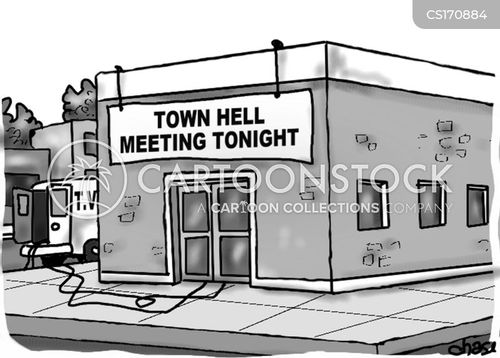
Tip O’Neill, former Speaker of the House, famously said that “all politics is local.” He’s not wrong, but he’s not right either. It’s not possible to accurately assert that all politics is anything, politics is many things. There are certainly many very important political issues that are local–issues that are closest to home and that matter the most in a person’s everyday life. There are also many important political issues that are important on a national or global scale, and cannot be considered as local as other issues.

O’Neill’s idea relates to the principle that all politicians can be successful by understanding and being able to effectively improve the issues and circumstances of their constituents. In many governments, part of the national government is made up of representatives from more local districts. In this way, national politics is the sum of all local politics. These politicians represent their own local districts and represent the issues and concerns of their constituents in the national government.
 df


There are many issues that may seem to be a national or global issue, but when examined more closely, they can also be looked at as local issues. Immigration is an issue in the United States for which policy is created at the national level. Immigration is certainly a local issue as well as a national one, however, especially for citizens living in areas close to the borders or in cities with major ports.

Labor and unemployment are other examples of issues that are often dealt with at the national level, yet affect people on a local level on a daily basis. While some people may claim that all politics is local, or answer the question with a yes or a no, “all” politics cannot be adequately described with one term. Politics are complicated, on a local, regional, national and global level.

Friday, October 24, 2014

Saudi Oil and Diplomacy

The price of brent crude oil is now at its lowest in over three years in an apparent move by the Saudi government to use their influence on the oil market as a tool of diplomacy. The precise intentions of the Saudis in encouraging the price of oil to fall are somewhat convoluted, however the falling price may have several results.


For one, the price drop will effectively provide a tax cut to American consumers, which will potentially stimulate the economy as a whole as well as benefit individual consumers. Also, the drop in price will put strain on the economies of Russia and Iran, which are already hurting from economic sanctions.

The move by the Saudis, according to some, is a carefully orchestrated plan to benefit diplomatically with the United States while also hurting their rivals in Iran and Russia. The relationship between Saudi Arabia and the United States has been somewhat stressed as of late due to the nuclear talks between the United States and Iran, a major rival to Saudi Arabia.

The Saudis would prefer to see the nuclear talks with Iran fail, however it is possible that the economic pressure on Iran from lower oil prices will encourage Tehran to be more agreeable at the talks in order to get relief from economic sanctions the country already faces.

There has been some speculation of direct collusion between the Saudis and the United States to cause the price of oil to drop as they did in the 1980s to put pressure on the Soviet Union. This does not appear to be the case this time, however, and the drop is not without consequences for the US economy. The drop in oil prices, in addition to hurting the Russian and Iranian economies, puts pressure on the American natural gas industry. The boom in natural gas in the United States has taken up a larger part of the global energy market in recent years and the Saudis intend to slow that growth with their influence on the oil market.

Image Source
Article Source

Monday, October 13, 2014

Water Diary

According to waterfootprint.org, I use 1,083 cubic meters of water in one year. This is significantly less than the national average for the United States, which is 2,842 cubic meters per year. According to nationalgeographic.com, I use 1,660 gallons of water each day. The U.S. average is 2,088 gallons per day.

The global average water footprint is 1,385 cubic meters per person per year, less than half the average in the United States. In the U.S., 20.2% of the water footprint falls outside of the country. In the Middle East, specifically in the Arabian Peninsula, the percentage of the water footprint falling outside of the states is much higher. In Yemen, 75.7% of the footprint falls outside; in the United Arab Emirates, 75.7% falls outside; in Saudi Arabia, 66.1% falls outside.

There are many implications that go along with having such large percentages of these water footprints falling outside of the states. This is an indication of the dependence on outside sources of water, food, and other goods that require large quantities of water to produce. Similar to the United States’ dependence on foreign oil, states in the Middle East are dependent on foreign water. This is a human rights issue, as well as an issue of economics and politics.

The average water footprint of an individual in Yemen is 901 cubic meters, while the average water footprint of someone in the United Arab Emirates is a whopping 3,136 cubic meters (more than twice the global average). Both have the same percentage of their footprint falling outside of the country. This disparity may be caused by the oil wealth enjoyed by the UAE and lacked by Yemen. People in poorer countries do not have the same access to fresh water as those in wealthier countries, which is a major reason for the water footprint being so much smaller.

States with larger percentages of their water footprints falling outside the country are subject to market fluctuations, potentially subjecting their economies to stress when food prices rise. States with smaller percentages of their water footprints falling outside the country are more self-sufficient and are not as subject to market fluctuations. Those countries that rely heavily on outside sources for water, food, and other goods are more interdependent, which is a bad thing from a realist’s perspective. According to liberalism, however, this interdependence is positive and fosters stability.

Tuesday, September 16, 2014

The"Others" in Our Communities


In any community, however large or small, there are social divides. These can be based on things such as race, age, gender, political affiliation, and religion; however they can also be based on groups such as fraternities and sororities, sports teams, and other clubs that one might find on a college campus. The culture at Dickinson College is fairly segmented into an “us and them” relationship. The different social organizations on campus can be very exclusive and there are even sharp tensions between different social groups, sometimes even leading to physical violence between members of the different groups. Evidence of the divisions between certain groups on campus can be seen scrawled on the desks and walls in graffiti, and can be overheard at social gatherings or in passing on the quad. The origins of these divisions are unclear, however there is now a culture on this campus of otherness.

Being a member of the Greek system, an “other” to me might generically be anyone who is unaffiliated. Someone who is unaffiliated may look at Greeks as others. There is a strong sense of otherness even within the Greek system, however, and there are rivalries between different organizations within the Greek system. These rivalries are the result of competition, just as sports teams have rivalries. Otherness is everywhere.

There have been efforts by the administration to break down these barriers by waging a war on Greek life and encouraging students to diversify their Dickinson experience, however it is unclear whether this has actually improved anything. There is still a very strong sense of otherness, regardless of the perspective one may take.

Tuesday, September 9, 2014

Understanding the Middle East

The circumstances under which a person grows up act as a frame or a lens through which that person may view the world. This is true of people who grow up and live in the United States and other parts of the West, as well as of people who grow up and live in the Middle East. Growing up and living in the United States provides people with a very slanted view of the Middle East, and without further investigation, a person living in the United States might never really understand the Middle East. The same is true for people living in the Middle East. The United States is portrayed and viewed a certain way in other countries, based on actions taken by the United States, its relations with other states, and its policies.

The cultures of the United States and of the Middle East are fundamentally different, and inevitably misunderstand each other. The culture of the United States is an amalgam of different cultures that have mixed together over the course of its history, and different regions within the United States have their own subcultures. The culture of the Middle East can be described similarly; there are many cultures spread across the different states and nations that are contained in the Middle East. Regardless of the region, however, the culture with which a person grows up shapes his or her view of the world.

In order to overcome these barriers and better understand each side of this, one must look beyond domestic sources of information. Getting news and information from a variety of sources rather than just one or a few is a good way to begin to overcome these barriers. Considering outside points of view with an open mind and attempting to look at issues from different angles are also good ways to try and understand other cultures and people more fully. Looking at foreign news sources, actually speaking with people from the Middle East, and traveling to the region are all excellent ways to overcome barriers and better understand.

Thursday, May 1, 2014

Freedom, or Lack Thereof, in Bahrain


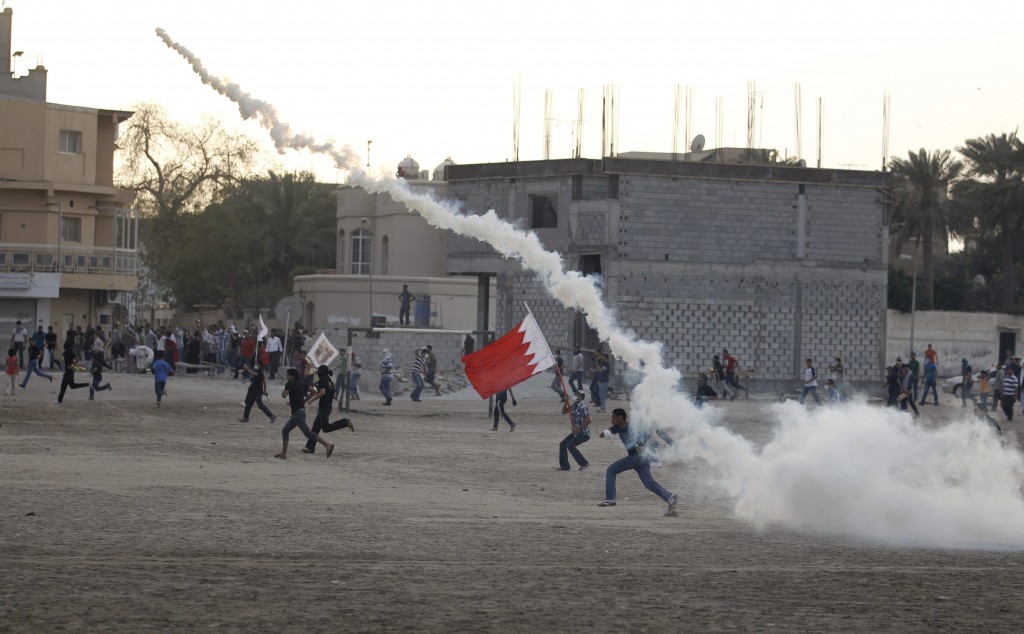
Bahrain has experienced sustained political and social unrest in the past several years, as a result of the Arab Spring and longstanding injustices instituted by the royal family. The population has a Shi’ite Muslim majority, however the country is ruled by the Sunni royal family, which influences who is represented in government. Shi’as are vastly underrepresented.

Political demonstrations are illegal in Bahrain, and are regularly met with brutal crackdowns by state police forces. Thousands of people have been arrested for demonstrating against the state, and detainees may be subject to torture of various kinds. These brutal responses by police only strengthen dissenters’ resolve, and demonstrations continue to gain strength.


Demonstrators themselves are not the only ones subject to arrest, exile, intimidation and torture. “The arrests also extended to journalists and bloggers who reported on the crackdown, and medical personnel who treated injured protesters. Thousands of people were fired from their jobs for supporting the uprising.” Organizers of human rights NGOs are often arrested and set up with fabricated charges, resulting in either lengthy prison sentences or exile.

Media ownership in Bahrain is far from an ideal situation, and the state owns all broadcast media. What few private newspapers exist are owned by businessmen close to the royal family. The government has a great deal of control over what is printed and broadcast, not only censoring unfavorable stories but fabricating and shaping news reports to cast a positive light on the regime and a negative one on human rights organizations and other NGOs. “Self-censorship is encouraged by the vaguely worded 2002 Press Law, which allows the state to imprison journalists for criticizing the king or Islam, or for threatening ‘national security.’”

The state blocks certain websites that it finds to be unfavorable, and has sentenced bloggers and other journalists in absentia for crimes against the state. The 2002 Press Law is vaguely worded and allows for a wide breadth of interpretation, allowing it to be applied to virtually any situation the king deems appropriate. Access to the country by foreign news media has also been restricted, with individual journalists being blocked from entering the country. Other journalists who have been allowed to enter the country have been arrested and deported for reporting on events contrary to the royal family’s wishes.

The King has total control over the judiciary, and virtually all other aspects of government. All laws are drafted by the king’s cabinet members, who are appointed by him, such that the king has control over what laws are written, how they are written, how they are implemented, and how they are enforced. Women are also vastly underrepresented in government and are generally not subject to the same protection under the law as men. Bahrain has scored a rating of “Not Free” by Freedom House, and ranks 53 out of 176 countries surveyed in Transparency International’s 2012 Corruption Perceptions Index.

 source