Showing posts with label media. Show all posts

Thursday, May 1, 2014

Freedom, or Lack Thereof, in Bahrain


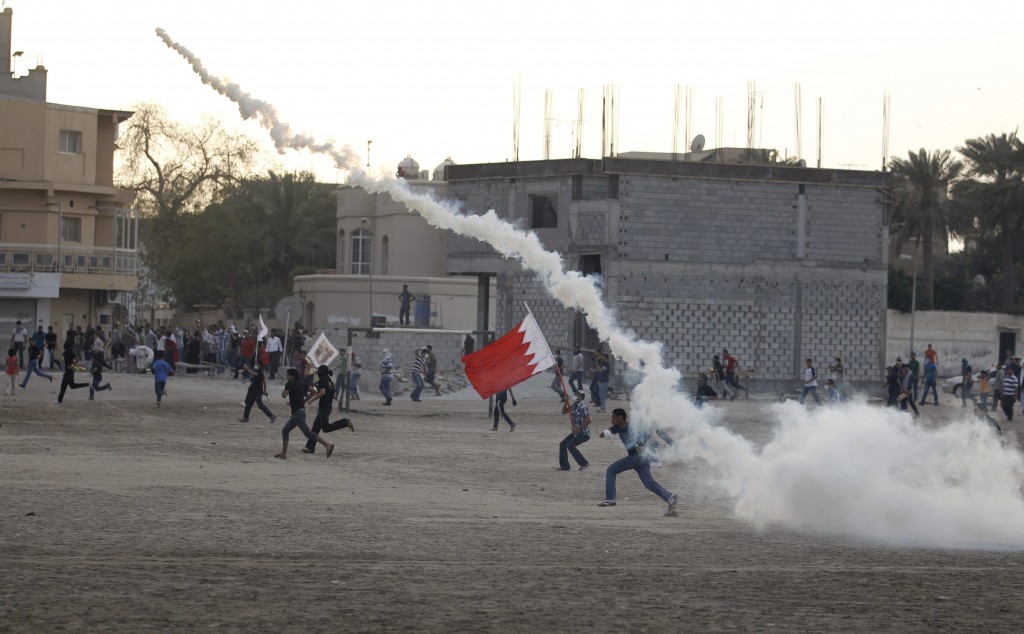
Bahrain has experienced sustained political and social unrest in the past several years, as a result of the Arab Spring and longstanding injustices instituted by the royal family. The population has a Shi’ite Muslim majority, however the country is ruled by the Sunni royal family, which influences who is represented in government. Shi’as are vastly underrepresented.

Political demonstrations are illegal in Bahrain, and are regularly met with brutal crackdowns by state police forces. Thousands of people have been arrested for demonstrating against the state, and detainees may be subject to torture of various kinds. These brutal responses by police only strengthen dissenters’ resolve, and demonstrations continue to gain strength.


Demonstrators themselves are not the only ones subject to arrest, exile, intimidation and torture. “The arrests also extended to journalists and bloggers who reported on the crackdown, and medical personnel who treated injured protesters. Thousands of people were fired from their jobs for supporting the uprising.” Organizers of human rights NGOs are often arrested and set up with fabricated charges, resulting in either lengthy prison sentences or exile.

Media ownership in Bahrain is far from an ideal situation, and the state owns all broadcast media. What few private newspapers exist are owned by businessmen close to the royal family. The government has a great deal of control over what is printed and broadcast, not only censoring unfavorable stories but fabricating and shaping news reports to cast a positive light on the regime and a negative one on human rights organizations and other NGOs. “Self-censorship is encouraged by the vaguely worded 2002 Press Law, which allows the state to imprison journalists for criticizing the king or Islam, or for threatening ‘national security.’”

The state blocks certain websites that it finds to be unfavorable, and has sentenced bloggers and other journalists in absentia for crimes against the state. The 2002 Press Law is vaguely worded and allows for a wide breadth of interpretation, allowing it to be applied to virtually any situation the king deems appropriate. Access to the country by foreign news media has also been restricted, with individual journalists being blocked from entering the country. Other journalists who have been allowed to enter the country have been arrested and deported for reporting on events contrary to the royal family’s wishes.

The King has total control over the judiciary, and virtually all other aspects of government. All laws are drafted by the king’s cabinet members, who are appointed by him, such that the king has control over what laws are written, how they are written, how they are implemented, and how they are enforced. Women are also vastly underrepresented in government and are generally not subject to the same protection under the law as men. Bahrain has scored a rating of “Not Free” by Freedom House, and ranks 53 out of 176 countries surveyed in Transparency International’s 2012 Corruption Perceptions Index.

 source

Sunday, April 13, 2014

Media and Uprsisings in Egypt and Tunisia

Egypt and Tunisia have both undergone uprisings and revolutions in the past several years, leading to significant changes in the way people use, produce, and think about media. Both mass media and social media have changed significantly in Egypt and Tunisia since the beginning of these uprisings.

Egypt

In Egypt, before the revolution and the ousting of President Mubarak in 2011, most newspapers and television stations were state-owned and there were censors located at each individual broadcast station and newspaper office. It was incredibly difficult to own one’s own newspaper due to financial and licensing policies. Although the vast majority of mass media was closely controlled by the government, Egyptians had fairly good access to international media and could rely on these sources for their news, rather than the state-owned Egyptian papers and television stations.

The state-run press in Egypt whole-heartedly supported Mubarak’s regime before and at the beginning of the uprising until it became clear that he may actually be ousted. Media continued to support the regime and provided minimal coverage of demonstrations and protests until it was impossible to ignore. By the day Mubarak stepped down, state television was fully behind the people, praising the revolution.

Until the uprising, people were not reliant on social media for their news because they had access to various international media outlets. Starting in 2008 with the labor strikes in Mahalla, social media was used extensively to discuss issues and to organize demonstrations. In 2010, the We Are All Khaled Said Facebook page was created in response to the death of a demonstrator at the hands of the police. This page subsequently became a place for Egyptians to congregate and discuss political issues and to organize demonstrations that ultimately led to the ousting of Mubarak in 2011.

After the uprising, there is more freedom of the press in Egypt, however it is a much more dangerous place to be a journalist now that the police state has fallen into a more chaotic one. There are many more privately owned newspapers and broadcast stations than ever before, and these freely discuss political issues. There is limited official censorship, however journalists are still jailed on erroneous charges and certain media companies such as Al Jazeera are subject to great discrimination.

Tunisia

Before the uprising in Tunisia, there were no international media outlets allowed in the country with the exception of one French news agency, and people regarded most mass media as a waste of time because it was so adulterated with propaganda and censorship. Instead of relying on mass media for news, a great many people turned to social media as their primary source of news because the news they found there was not a direct product of propaganda factories or state censors. There was a much greater breadth of news online than in conventional state-owned media, however the quality of the information found on these sources varies a great deal, which is a problem because people tend to be less cautious about the information they are receiving when it is not coming from a state source.

Virtually all media was state owned before the uprising, and the media outlets not officially owned by the state were run by people very close to the regime, such as Ben Ali’s family and close friends, who could be trusted to only broadcast or print things favorable to the regime and to maintain the status quo. In 2003 the regime began to cautiously issue licenses for television stations and newspapers, which appeared to be privatization but was actually just crony capitalism.

In the years leading up to the uprising, the regime figured out what social media was and how it could be used by the people and it tightened its grip on internet censorship significantly. Only China had a more sophisticated internet filtering system than Tunisia. During the uprising, however, Ben Ali lifted internet censorship entirely in an effort to appease the people and to quell the uprising. This move backfired, however, and was seen as a sign of weakness by the people, and the uprising continued.

After the uprising, Tunisia has a constitution that is quite liberal and progressive, even by international standards. There are many diverse and private broadcast stations and newspapers in Tunisia, with light regulation, however many people still prefer social media as their primary source of news. This may be a result of years of habit of distrust in conventional media and total reliance on social media for news.

Thursday, February 27, 2014

Why Egypt Hates Al Jazeera

For the past eight weeks, three Al Jazeera English journalists have been imprisoned in Tora Prison in Cairo. The three were arrested in their Cairo hotel room on December 29th and charged with conspiring with a terrorist group and producing false news. This is not an isolated incident; more than 80 journalists have been jailed in Egypt in the past year, many of whom were released within several days. In addition to the three Al Jazeera journalists being held, seventeen other journalists affiliated with various news outlets were also charged “in a prosecution statement leaked to local media on January 29...It accused 20 journalists, many of whom had no connection to Al Jazeera, of broadcasting false information to ‘convince the international community that Egypt was undergoing a civil war.’” A main reason for Egyptian hostility toward Al Jazeera is that it is owned by Qatar, which supports the Muslim Brotherhood, which was declared a terrorist organization by the Egyptian government. This hostility is exacerbated by conflation of Al Jazeera English with AJ Arabic. Adel Fahmy expressed his apprehension about the hostility: "[Al Jazeera English] is totally different, and should be perceived in a different way, but unfortunately it's not ... so we had a slight fear, but we never thought [the arrests] would actually happen."

The attacks on Al Jazeera journalists are not limited to the Egyptian government. An angry mob in Tahrir Square attacks two newspaper reporters who were suspected of working for Al Jazeera. “The New York-based Committee to Protect Journalists said in its annual report that Egypt was the third-deadliest country for reporters in 2013, and the country ranked 159th on Reporters Without Borders's annual press freedom index, a notch below Pakistan.” Hate for the Muslim Brotherhood is widespread in Egypt, many citizens as well as the government have designated the brotherhood a terrorist organization, and have transferred that hate to Al Jazeera. This may be because the Arabic counterpart of Al Jazeera “routinely gives airtime to guests with sharply sectarian and reactionary views, which often go unchallenged.” The channel hosts many exiled Islamic leaders and members of the Muslim Brotherhood, however none of this makes it onto the English channel. They are totally separate news outlets, yet the Egyptian government and people fail to recognize this, conflating the two channels and targeting any journalist affiliated with Al Jazeera in any way. In further evidence that the journalists detained since Decemeber are not Brotherhood sympathizers, Al Jazeera’s Mohamed Fahmy joined in two large anti-Brotherhood demonstrations last year, not as a journalist, but as a protestor.


Source Article: http://www.foreignpolicy.com/articles/2014/02/19/why_egypt_hates_al_jazeera

Wednesday, February 19, 2014

Freedom of the Press in Iran


Many NGOs agree that Iran is one of the worst places in the world to be if you are a journalist. Iran currently imprisons the second most journalists in the world, second only to Turkey. As of December 1, 2013, thirty countries were holding at least one journalist prisoner, including the United States. The number of journalist prisoners Iran holds, 35 as of December 1, 2013, has actually decreased since 2012. In 2009, Iran imprisoned just over 20 journalists, but by 2012 they had incarcerated nearly 45 journalists. Iran maintains stringent controls over every aspect of media. In 2010, Iran banned the sale of any books that had received a publishing license prior to 2007. In 2012 one of the largest publishing houses in Iran had its operating license revoked. Television and radio broadcasting are directing controlled by the government, and satellite dishes are illegal. The government regularly bans media coverage of international sanctions, oppositional leaders, and criticism of the country’s nuclear policy. In addition to specific controls such as these, the government has some very vague rules in place that can be implemented in just about any case of media coverage the authorities do not find favorable. Journalists can be prosecuted for “mutiny against Islam,” “insulting legal or real person who are lawfully respected,” and “propaganda against the regime.” Many social media sites are also blocked in Iran, including Facebook, Twitter, and YouTube.

It appeared that there was hope for the situation in Iran during the presidential race of 2005, when Mahmoud Ahmadinejad ran on promises to fight corruption and redistribute wealth to the poor. Once elected, however, Ahmadinejad launched an ultra-conservative administration that actually tightened governmental controls in many arenas, which led to a decrease in civil liberties and even stricter morality laws.

In addition to the egregious restrictions placed on media coverage and journalists, religious, gender-based, sexual and intellectual prejudices are prevalent in Iran. Converting from Islam to another religion is punishable by death. Scholars can be detained, intimidated or forced to retire for expressing their own political views. Women are barred from studying many fields at university, and are widely regarded to be worth about half of what one man is worth. A woman’s testimony in court is regarded with only half the weight of a man’s testimony. Similarly, the damages awarded to a female victim are routinely half of that awarded to a male victim. People who are accused of a crime and arrested may be refused legal counsel and may be tried in closed sessions. Iran’s penal code is based on Sharia, which mandates the death penalty for a wide range of offenses; consequently, Iran executes more people than every other country in the world except for China.

In 2013, Freedom House gave Iran a 6 Freedom Rating, a 6 in Civil Liberties, and a 6 in Political Rights. The scale ranges from 1 to 7, 7 being the worst. The media in Iran is absolutely “not free” according to Freedom House. In 2013 there were only six countries less free than Iran, according to Freedom House, one of which is North Korea. Iran did manage to be the least free state in all of the Middle East and North Africa, which is generally considered to be the world’s least free region. I was mildly surprised by just how bad it is for media in Iran, but I can’t say that I was taken aback by any means. I knew there were extremely limited free speech and civil liberties in Iran, but after doing some research I know more specific details about how these liberties are limited.

Wednesday, January 29, 2014

My Media Habits

I use many forms of media throughout the day, including printed text such as books and online articles, Facebook, Twitter, Instagram, The New York Times app, CNN, Reddit and more recently, blogs. When I have free time (and energy), I read books for pleasure and for extracurricular activities. While school is in session I am usually only able to bring myself to read what is assigned for my various classes, which is a good amount by itself. I use Facebook mostly to communicate with friends and post photos, but I also use it to keep up with friends' blogs and other pages that I've "liked." I visit Twitter several times a week either on the Twitter app on my iPhone or on the website. I follow many of my friends, politicians, several comedians and satire accounts, sports analysts and athletes, as well as several news outlets and magazines. I use Instagram to post pictures sporadically; I mostly use it to follow friends and "earth porn" accounts. I spend many hours a week in the campus dining hall, and when not conversing with friends or eating, my eyes are glued to the television tuned to CNN. I'm not very partial to CNN; I would much rather watch some other news source that reports less on Justin Bieber and more on actually important and pertinent issues. I check my New York Times app throughout the day for updates on world news headlines. I spend far too much time using Reddit when I could be making better use of my time, but occasionally I find and read news articles or op eds that appear on various "subreddits." I had never blogged until I got to college, and even until this semester my use of blogs was rare; I blog exclusively in accordance with course requirements. This semester I am using two blogs: one for Media & Politics in the Middle East & North Africa, and another for History of Modern Europe. For my history course I post one blog post each week and comment on several other people’s posts.