Sunday, March 1, 2015

A Siege of Salt and Sand: Tunisia's Environmental Problems


The documentary about environmental and governance issues in Tunisia, A Siege of Salt and Sand, details the everyday struggles faced by Tunisians caused by two seemingly opposite factors: the sea and the desert. Climate change and rising sea levels have contributed to economic distress in the country, and the unsustainable projects undertaken by Ben Ali have not helped matters. The ousted president undertook many large construction projects, claiming that they were sustainable and good for the country when it was quite obvious to the population that this was not the case. He even created a bizarre mascot for these projects, Labib, which was meant to resemble a desert fox.

64% of Tunisia’s territory is threatened by desertification, and rising sea levels have led to the formation of salt flats where agricultural production is no long possible. One third of Kerkennah is now salt flats.

Climate change has also led to the intrusion of dangerous species that have brought disease and parasites such as Cutaneous Leishmaniasis, which is caused by the parasitic protozoa leishmania transmitted by sandfly bites. This parasitic infection causes painful lesions on the skin which inevitably lead to unsightly, permanent scars.

Sand encroachment is another major problem, and once land falls victim to desertification, the damage is irreversible. Sand drifts bury whole houses and swallow villages. The people of Tunisia have attempted to resist sand drifts and desertification by building sand walls consisting of one meter high walls topped with palm leaves, however this only delays the inevitable.

Water scarcity is also very prevalent in Tunisia, and some areas go years without any rainfall. When it does rain it is often in negligible amounts–5-10 millimeters at a time. Climate change has been such an important issue in the country that when the new constitution was drafted after the ousting of Ben Ali in 2011, Tunisia became one of three countries in the world to include climate change in its constitution.

Rentierism in the Middle East and North Africa

Rentier states and rentierism are common in the Middle East and North Africa, however it is not solely because of oil rents that authoritarian regimes are so prevalent there. Such a unilateral explanation of anything could be characterized as a vast oversimplification. There are other states in the world that have oil rents of comparable size to those found in the Middle East and North Africa. Norway’s oil rents were last measured in 2012 at 9.4% of the country’s GDP. Qatar’s oil rents accounted for 12.1% of its GDP in 2012. The difference is that oil was not discovered in Norway until 1969, more than 150 years after the constitution of Norway was adopted. The Norwegian government and economy were already well established and stable at this point. Oil was discovered in the Middle East in Persia in 1908 and in Saudi Arabia in 1938.

The Sykes-Picot Agreement in 1916 carved up the Middle East between French and British influence into mandates, which differed minimally from colonies. The current state system in the Middle East and North Africa is largely a result of this agreement and others made in the years surrounding the first world war. National borders and state borders do not match up as a result of this lack of self-determination, which is one of many factors contributing to instability in the region. The states in the Middle East and North Africa are all very young. Many of these states did not achieve independence from Western influence until after World War II, and in some cases not until the 1960s and 70s, as in the cases of Algeria and Iran, respectively.


European influence in the Middle East and North Africa may be one of the factors contributing to the prominence of authoritarian regimes there, specifically monarchies. European powers, especially the UK and France set up monarchies in their mandates in the Middle East after World War I. Much as the United States strives to spread democracy across the globe, these monarchical states set up governments in their own image to some extent. The collapse of the Ottoman Empire in 1923 also contributed in large part to the current state of affairs in the Middle East.

The interaction of large oil rents in these states with such factors as European influence, existing instability, and existing authoritarian and monarchical regimes produces these “peculiarly pathological political outcomes.” At the time oil was discovered in the Middle East and North Africa, the mandate and colonial system was still in place and European influence maintained stability to some extent. After these states achieved independence at various points during the twentieth century, newly independent regimes had huge oil rents and new-found power without European powers keeping them closely in check.

A confluence of large oil rents, the mandate system and the resulting state system is largely responsible for the current state of the Middle East and North Africa. Some political scientists have asserted that the Middle East needs decades of interstate and intrastate war before it achieves a state system that matches national borders and overcomes the currently dominant political pathology. The European state system is mainly a result of centuries of war since the middle ages. This process of state formation was never allowed to happen in the Middle East and North Africa because of Western presence in the region.

Monday, February 2, 2015

The Problem with Democratization

There are several main problems that Anderson talks about in her article, including:

1. “Insincere rulers” who hold out democracy as their form of government, naming their states “democratic republic of...” “people’s republic of...” when in reality, these states are not in any sense of the word, democracies. In fact, the presence of the word democratic in the name of a state is a fairly reliable bellwether for the presence of an authoritarian regime.

2. Democracy is destabilizing. The United States and others have historically been perfectly willing to allow traditional autocratic rulers remain in power in order to maintain the status quo and stability. The United States’ Cold War policy of supporting Islamist regimes that would help stand against the atheist communist Soviet Union in many ways contributed to the resistance to democratization in the Middle East we see today. Islam is not inherently resistant to democracy, as we can see in Indonesia and Turkey (at the time the Anderson article was written), while Arab Muslim states seem to be the ones with the major democratic deficit. These Arab states are the ones that were most directly influenced by American Cold War policy.

3. Rentier states in which governments can effectively bribe their people into acquiescence. People pay no taxes in these states and are instead paid dividends each year by their governments, that have massive hydrocarbon wealth.

According to Anderson's argument, the United States’ involvement in the region since the end of the second world war has been and continues to be the single most potent problem for democratization in the region. The US helped to cement a system of authoritarian regimes in the region through its involvement both as it relates to the Cold War and opposition to atheist communism, as well as the maintenance of access to abundant oil resources in the region. The United States and other Western powers have been very active in the region over the past sixty years, helping to cement rentier states with authoritarian regimes.

The Arab uprisings of 2010-11 have changed matters very little in the long run. Some of the uprisings ultimately resulted in civil war, as in the cases of Syria and Libya, a failed state in Yemen, and ongoing violence and unrest in other states. Tunisia is one example of a state that successfully transitioned to democracy with a fairly good constitution as a result of the Arab Spring.


Monday, December 1, 2014

Israel and Palestine: Diplomacy at work

I do not believe that the resolution of the issues between Israel and Palestine lies with the ascendancy of more moderate political leaders. The closest to being resolved the Israeli-Palestinian Conflict has been was at the Oslo Accords in 1993 with Yasser Arafat and Yitzhak Rabin. Arafat was not exactly a hardliner, but he wasn’t a quite moderate either. Rabin was politically moderate, even too moderate, according to some.

Although the Oslo Accords did not ultimately result in an agreement between Israel and the Palestinians, it did precipitate a Nobel Prize shared by Arafat and Rabin (and Shimon Peres). Two years after the famous handshake between the two leaders on the White House lawn, Rabin was assassinated by a radical right-wing Israeli who did not approve of the signing of the Oslo Accords. In this case, moderate, or fairly moderate, political leaders were able to make some progress in reaching a settlement, but were unable to reach a final status.

In 1972 when President Nixon made a diplomatic visit to China, it was looked at as very uncharacteristic of him as a politician because he was known as being very conservative and anti-communist. His reputation was what allowed him to make that visit successfully and help to thaw relations between the United States and China without public backlash. No one questioned whether he was sympathetic to the Communist cause because he had such a strong reputation for conservatism and anti-communism.

President Reagan took advantage of a similar situation to help end the Cold War when he nurtured a positive relationship with Mikhail Gorbachev. Reagan had a track record of being conservative and his motives and allegiance to democracy were not brought into question when he acknowledged that the Soviet Union was no longer an “Evil Empire.”

It may be that it is not moderates, but more partisan political leaders who may bring about the settlement of final status issues between Israelis and Palestinians. Moderates are subject to criticism and accusations of being too soft or conceding too much during negotiations, whereas more partisan leaders have secured stronger reputations with their constituents.

Sunday, November 30, 2014

All Politics Is Local?

Tip O’Neill, former Speaker of the House, famously said that “all politics is local.” He’s not wrong, but he’s not right either. It’s not possible to accurately assert that all politics is anything, politics is many things. There are certainly many very important political issues that are local–issues that are closest to home and that matter the most in a person’s everyday life. There are also many important political issues that are important on a national or global scale, and cannot be considered as local as other issues.

O’Neill’s idea relates to the principle that all politicians can be successful by understanding and being able to effectively improve the issues and circumstances of their constituents. In many governments, part of the national government is made up of representatives from more local districts. In this way, national politics is the sum of all local politics. These politicians represent their own local districts and represent the issues and concerns of their constituents in the national government.
 df


There are many issues that may seem to be a national or global issue, but when examined more closely, they can also be looked at as local issues. Immigration is an issue in the United States for which policy is created at the national level. Immigration is certainly a local issue as well as a national one, however, especially for citizens living in areas close to the borders or in cities with major ports.

Labor and unemployment are other examples of issues that are often dealt with at the national level, yet affect people on a local level on a daily basis. While some people may claim that all politics is local, or answer the question with a yes or a no, “all” politics cannot be adequately described with one term. Politics are complicated, on a local, regional, national and global level.

Friday, October 24, 2014

Saudi Oil and Diplomacy

The price of brent crude oil is now at its lowest in over three years in an apparent move by the Saudi government to use their influence on the oil market as a tool of diplomacy. The precise intentions of the Saudis in encouraging the price of oil to fall are somewhat convoluted, however the falling price may have several results.


For one, the price drop will effectively provide a tax cut to American consumers, which will potentially stimulate the economy as a whole as well as benefit individual consumers. Also, the drop in price will put strain on the economies of Russia and Iran, which are already hurting from economic sanctions.

The move by the Saudis, according to some, is a carefully orchestrated plan to benefit diplomatically with the United States while also hurting their rivals in Iran and Russia. The relationship between Saudi Arabia and the United States has been somewhat stressed as of late due to the nuclear talks between the United States and Iran, a major rival to Saudi Arabia.

The Saudis would prefer to see the nuclear talks with Iran fail, however it is possible that the economic pressure on Iran from lower oil prices will encourage Tehran to be more agreeable at the talks in order to get relief from economic sanctions the country already faces.

There has been some speculation of direct collusion between the Saudis and the United States to cause the price of oil to drop as they did in the 1980s to put pressure on the Soviet Union. This does not appear to be the case this time, however, and the drop is not without consequences for the US economy. The drop in oil prices, in addition to hurting the Russian and Iranian economies, puts pressure on the American natural gas industry. The boom in natural gas in the United States has taken up a larger part of the global energy market in recent years and the Saudis intend to slow that growth with their influence on the oil market.

Image Source
Article Source

Monday, October 13, 2014

Water Diary

According to waterfootprint.org, I use 1,083 cubic meters of water in one year. This is significantly less than the national average for the United States, which is 2,842 cubic meters per year. According to nationalgeographic.com, I use 1,660 gallons of water each day. The U.S. average is 2,088 gallons per day.

The global average water footprint is 1,385 cubic meters per person per year, less than half the average in the United States. In the U.S., 20.2% of the water footprint falls outside of the country. In the Middle East, specifically in the Arabian Peninsula, the percentage of the water footprint falling outside of the states is much higher. In Yemen, 75.7% of the footprint falls outside; in the United Arab Emirates, 75.7% falls outside; in Saudi Arabia, 66.1% falls outside.

There are many implications that go along with having such large percentages of these water footprints falling outside of the states. This is an indication of the dependence on outside sources of water, food, and other goods that require large quantities of water to produce. Similar to the United States’ dependence on foreign oil, states in the Middle East are dependent on foreign water. This is a human rights issue, as well as an issue of economics and politics.

The average water footprint of an individual in Yemen is 901 cubic meters, while the average water footprint of someone in the United Arab Emirates is a whopping 3,136 cubic meters (more than twice the global average). Both have the same percentage of their footprint falling outside of the country. This disparity may be caused by the oil wealth enjoyed by the UAE and lacked by Yemen. People in poorer countries do not have the same access to fresh water as those in wealthier countries, which is a major reason for the water footprint being so much smaller.

States with larger percentages of their water footprints falling outside the country are subject to market fluctuations, potentially subjecting their economies to stress when food prices rise. States with smaller percentages of their water footprints falling outside the country are more self-sufficient and are not as subject to market fluctuations. Those countries that rely heavily on outside sources for water, food, and other goods are more interdependent, which is a bad thing from a realist’s perspective. According to liberalism, however, this interdependence is positive and fosters stability.

Tuesday, September 16, 2014

The"Others" in Our Communities


In any community, however large or small, there are social divides. These can be based on things such as race, age, gender, political affiliation, and religion; however they can also be based on groups such as fraternities and sororities, sports teams, and other clubs that one might find on a college campus. The culture at Dickinson College is fairly segmented into an “us and them” relationship. The different social organizations on campus can be very exclusive and there are even sharp tensions between different social groups, sometimes even leading to physical violence between members of the different groups. Evidence of the divisions between certain groups on campus can be seen scrawled on the desks and walls in graffiti, and can be overheard at social gatherings or in passing on the quad. The origins of these divisions are unclear, however there is now a culture on this campus of otherness.

Being a member of the Greek system, an “other” to me might generically be anyone who is unaffiliated. Someone who is unaffiliated may look at Greeks as others. There is a strong sense of otherness even within the Greek system, however, and there are rivalries between different organizations within the Greek system. These rivalries are the result of competition, just as sports teams have rivalries. Otherness is everywhere.

There have been efforts by the administration to break down these barriers by waging a war on Greek life and encouraging students to diversify their Dickinson experience, however it is unclear whether this has actually improved anything. There is still a very strong sense of otherness, regardless of the perspective one may take.

Tuesday, September 9, 2014

Understanding the Middle East

The circumstances under which a person grows up act as a frame or a lens through which that person may view the world. This is true of people who grow up and live in the United States and other parts of the West, as well as of people who grow up and live in the Middle East. Growing up and living in the United States provides people with a very slanted view of the Middle East, and without further investigation, a person living in the United States might never really understand the Middle East. The same is true for people living in the Middle East. The United States is portrayed and viewed a certain way in other countries, based on actions taken by the United States, its relations with other states, and its policies.

The cultures of the United States and of the Middle East are fundamentally different, and inevitably misunderstand each other. The culture of the United States is an amalgam of different cultures that have mixed together over the course of its history, and different regions within the United States have their own subcultures. The culture of the Middle East can be described similarly; there are many cultures spread across the different states and nations that are contained in the Middle East. Regardless of the region, however, the culture with which a person grows up shapes his or her view of the world.

In order to overcome these barriers and better understand each side of this, one must look beyond domestic sources of information. Getting news and information from a variety of sources rather than just one or a few is a good way to begin to overcome these barriers. Considering outside points of view with an open mind and attempting to look at issues from different angles are also good ways to try and understand other cultures and people more fully. Looking at foreign news sources, actually speaking with people from the Middle East, and traveling to the region are all excellent ways to overcome barriers and better understand.

Thursday, May 1, 2014

Freedom, or Lack Thereof, in Bahrain


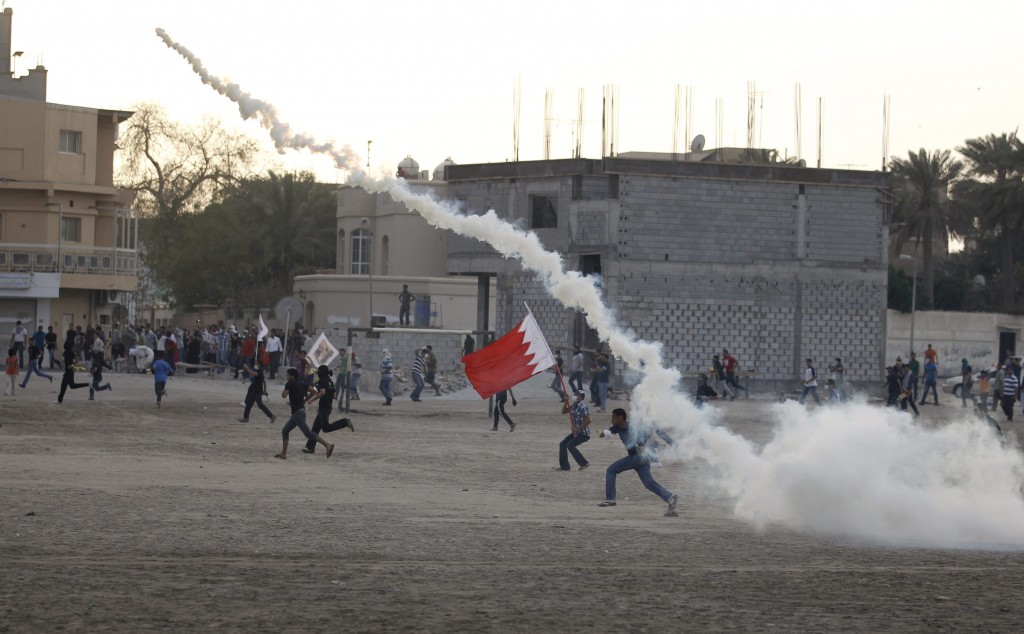
Bahrain has experienced sustained political and social unrest in the past several years, as a result of the Arab Spring and longstanding injustices instituted by the royal family. The population has a Shi’ite Muslim majority, however the country is ruled by the Sunni royal family, which influences who is represented in government. Shi’as are vastly underrepresented.

Political demonstrations are illegal in Bahrain, and are regularly met with brutal crackdowns by state police forces. Thousands of people have been arrested for demonstrating against the state, and detainees may be subject to torture of various kinds. These brutal responses by police only strengthen dissenters’ resolve, and demonstrations continue to gain strength.


Demonstrators themselves are not the only ones subject to arrest, exile, intimidation and torture. “The arrests also extended to journalists and bloggers who reported on the crackdown, and medical personnel who treated injured protesters. Thousands of people were fired from their jobs for supporting the uprising.” Organizers of human rights NGOs are often arrested and set up with fabricated charges, resulting in either lengthy prison sentences or exile.

Media ownership in Bahrain is far from an ideal situation, and the state owns all broadcast media. What few private newspapers exist are owned by businessmen close to the royal family. The government has a great deal of control over what is printed and broadcast, not only censoring unfavorable stories but fabricating and shaping news reports to cast a positive light on the regime and a negative one on human rights organizations and other NGOs. “Self-censorship is encouraged by the vaguely worded 2002 Press Law, which allows the state to imprison journalists for criticizing the king or Islam, or for threatening ‘national security.’”

The state blocks certain websites that it finds to be unfavorable, and has sentenced bloggers and other journalists in absentia for crimes against the state. The 2002 Press Law is vaguely worded and allows for a wide breadth of interpretation, allowing it to be applied to virtually any situation the king deems appropriate. Access to the country by foreign news media has also been restricted, with individual journalists being blocked from entering the country. Other journalists who have been allowed to enter the country have been arrested and deported for reporting on events contrary to the royal family’s wishes.

The King has total control over the judiciary, and virtually all other aspects of government. All laws are drafted by the king’s cabinet members, who are appointed by him, such that the king has control over what laws are written, how they are written, how they are implemented, and how they are enforced. Women are also vastly underrepresented in government and are generally not subject to the same protection under the law as men. Bahrain has scored a rating of “Not Free” by Freedom House, and ranks 53 out of 176 countries surveyed in Transparency International’s 2012 Corruption Perceptions Index.

 source

Wednesday, April 30, 2014

Pakistan: Journalists under fire

“New report finds almost no one is punished for the daily threats and deadly attacks faced by journalists in Pakistan.”

Pakistan has seen the deaths of at least 44 journalists as a result of their work in the past decade, and four journalists have been killed so far this year. Pakistan has long been ranked one of the most dangerous places in the world for journalists, and little is being done to change this. Reporters Without Borders “ranked Pakistan 158th out of 180 countries on its World Press Freedom Index this year - placing it below several countries considered to be active conflict zones, including Afghanistan (128th) and Iraq (153rd).”

Threats to journalists in Pakistan come from all sides–state intelligence agencies, police, military, sectarian groups, and religious extremist groups. The demands of these groups often contradict each other, placing journalists in a difficult situation. Journalists are coerced to shape their reporting based on the demands of these groups at the threat of violence, yet it becomes impossible for journalists to comply with all these demands at once. "Many are stuck in a situation where taking one perspective almost necessarily puts them at risk of incurring the wrath of another actor. So a lot of journalists are stuck in this almost impossible situation where catering to one perpetrator to avoid risk of abuse almost inevitably increases the risk of abuse from another perpetrator."

Threats and acts of violence against journalists go almost entirely unpunished in Pakistan, and there have been just two convictions in the murders of journalists in the past two decades. There is no mechanism or incentive to stop the human rights abuses and intimidation that is going on here, because people are literally getting away with murder. There is almost perfect impunity for crimes against journalists in Pakistan.

Any attempt by news outlets to expose or remedy the attacks on journalists are dealt with harshly, as was the case when a journalist for Geo, a television station, was attacked by gunmen and badly injured. The television station aired reports that accused the ISI (Inter-Services Intelligence) of the attacks on its journalist. The station received backlash from other news stations, which accused it of producing anti-state propaganda, as well as from the state, which moved to revoke Geo’s broadcasting license as a result of the accusations aired by the station.

As a result of the constant threat of violence against journalists, self-censorship runs rampant in broadcasting agencies “If the state doesn't like you, they eliminate you. If non-state actors don't like you, they just eliminate you."


Source

Tuesday, April 22, 2014

The Balance of Controls and Freedoms in Media

There are many strategies that regimes implement to oppress media freedoms, including threats of violence and imprisonment, state media ownership, bribery, censors, and vague laws interpreted on a case-by-case basis. Since the Arab Spring, many states in the Middle East and North Africa have seen improved freedoms for the media. Before the wave of uprisings, states such as Tunisia and Egypt both had strict laws and practices keeping media under the states’ control.

Tunisian media until 2003 was virtually entirely state-owned; licenses for television and radio stations were cautiously issued to people close to the regime who could be trusted to manage the content of their stations appropriately. In addition to the predominantly state-owned media, no foreign media were allowed into the country, with the exception of one French outlet. The media was tailored to show only positive views of the country and of its leader, essentially making them propaganda factories. Uprisings and other negative events in the country were largely ignored by the media. Social and labor unrest began to be prevalent in the country, at which point Ben Ali began to relax regulations and allow journalists and netizens more freedom. This move was seen as a sign of weakness and Ben Ali was eventually forced to flee the country in early 2011. The new constitution of Tunisia is actually quite progressive by international standards and most media is privatized, diverse and very lightly regulated.

In Mubarak’s Egypt, media freedom was very limited. There was a censor located at each individual media outlet, and owning one’s own newspaper was very difficult. Only people who were relatively close to the regime who could be trusted to manage content were given licenses to own newspapers or broadcast stations. State owned media and media closely controlled by the government covered only stories that would reflect positively on the regime, or at least not negatively. These regulations and censors were generally not very effective in Egypt, however, because the public had good access to international media. Most of the regime’s efforts to control the media fell flat because people were able to access international media as well as utilize social media for organizational purposes. Mubarak, like Ben Ali, was ousted after months of social unrest and demonstrations.

In contrast to these two states whose leaders have been ousted from power after years of oppression and non-existent media freedom, Lebanon is an example of a good balance of control and freedom. There has not been a major uprising in Lebanon in recent years, and the state was largely unaffected by the Arab Spring. Most media in Lebanon is privately owned, and is quite diverse. Media ownership is primarily reserved for powerful businessmen and other elites, but is not controlled for content by the government. There is enough media freedom in Lebanon that journalists and citizens have not been motivated to stage an uprising, yet the government still exercises a certain amount of control over the media. The 1994 Media Law places strict taxes and fees on media outlets, and there is a state agency that censors all incoming foreign media for religious and other controversial content. It is also illegal to slander religion or the president, however most other topics are fairly open. Lebanon has exercised an ample amount of control over its media such that it will be successful in maintaining the status quo, and the president will survive and remain in power.

Sunday, April 13, 2014

Media and Uprsisings in Egypt and Tunisia

Egypt and Tunisia have both undergone uprisings and revolutions in the past several years, leading to significant changes in the way people use, produce, and think about media. Both mass media and social media have changed significantly in Egypt and Tunisia since the beginning of these uprisings.

Egypt

In Egypt, before the revolution and the ousting of President Mubarak in 2011, most newspapers and television stations were state-owned and there were censors located at each individual broadcast station and newspaper office. It was incredibly difficult to own one’s own newspaper due to financial and licensing policies. Although the vast majority of mass media was closely controlled by the government, Egyptians had fairly good access to international media and could rely on these sources for their news, rather than the state-owned Egyptian papers and television stations.

The state-run press in Egypt whole-heartedly supported Mubarak’s regime before and at the beginning of the uprising until it became clear that he may actually be ousted. Media continued to support the regime and provided minimal coverage of demonstrations and protests until it was impossible to ignore. By the day Mubarak stepped down, state television was fully behind the people, praising the revolution.

Until the uprising, people were not reliant on social media for their news because they had access to various international media outlets. Starting in 2008 with the labor strikes in Mahalla, social media was used extensively to discuss issues and to organize demonstrations. In 2010, the We Are All Khaled Said Facebook page was created in response to the death of a demonstrator at the hands of the police. This page subsequently became a place for Egyptians to congregate and discuss political issues and to organize demonstrations that ultimately led to the ousting of Mubarak in 2011.

After the uprising, there is more freedom of the press in Egypt, however it is a much more dangerous place to be a journalist now that the police state has fallen into a more chaotic one. There are many more privately owned newspapers and broadcast stations than ever before, and these freely discuss political issues. There is limited official censorship, however journalists are still jailed on erroneous charges and certain media companies such as Al Jazeera are subject to great discrimination.

Tunisia

Before the uprising in Tunisia, there were no international media outlets allowed in the country with the exception of one French news agency, and people regarded most mass media as a waste of time because it was so adulterated with propaganda and censorship. Instead of relying on mass media for news, a great many people turned to social media as their primary source of news because the news they found there was not a direct product of propaganda factories or state censors. There was a much greater breadth of news online than in conventional state-owned media, however the quality of the information found on these sources varies a great deal, which is a problem because people tend to be less cautious about the information they are receiving when it is not coming from a state source.

Virtually all media was state owned before the uprising, and the media outlets not officially owned by the state were run by people very close to the regime, such as Ben Ali’s family and close friends, who could be trusted to only broadcast or print things favorable to the regime and to maintain the status quo. In 2003 the regime began to cautiously issue licenses for television stations and newspapers, which appeared to be privatization but was actually just crony capitalism.

In the years leading up to the uprising, the regime figured out what social media was and how it could be used by the people and it tightened its grip on internet censorship significantly. Only China had a more sophisticated internet filtering system than Tunisia. During the uprising, however, Ben Ali lifted internet censorship entirely in an effort to appease the people and to quell the uprising. This move backfired, however, and was seen as a sign of weakness by the people, and the uprising continued.

After the uprising, Tunisia has a constitution that is quite liberal and progressive, even by international standards. There are many diverse and private broadcast stations and newspapers in Tunisia, with light regulation, however many people still prefer social media as their primary source of news. This may be a result of years of habit of distrust in conventional media and total reliance on social media for news.

Thursday, April 3, 2014

USAID Created Cuban Twitter Clone

In 2009, the US government launched its own version of Twitter in Cuba, called ZunZuneo, slang for a hummingbird’s tweet. The project was executed through USAID, which channelled funds for the project through the Cayman Islands and Spain such that the paper trail would not lead back to the US. The details are murky concerning whether or not the project was actually legal under United States law, “which requires written authorization of covert action by the president and congressional notification. Officials at USAID would not say who had approved the program or whether the White House was aware of it.” (source)

The project was born in 2009 when affiliates of the U.S. Agency for International Development covertly gained half a million Cuban cell-phone numbers purportedly through a contact at Cuba’s state-run service provider. USAID began to build a subscriber base through these phone numbers, introducing non-controversial topics to the network such as sports, music, and weather. The plan was to gain a large subscriber base, up to several hundred thousand users, and to introduce political trending topics to the network once ZunZuneo reached critical mass. The subscriber base never reached the height that its designers had hoped it would– there were just 40,000 subscribers at its height.
http://lh6.ggpht.com/MK3HqfhV4yBuMDl6zKdaplNKo3hl1DVLgFppL7lTeZWWb5m0GlmFEF55hutInw_llq1CgQt-V2GqDmLS6bnyFL6aOyBXQ-xlO5s=s0
The ultimate objective of the project was to give Cubans access to a functional social network not controlled by the authoritarian Cuban government, and to provide a mechanism for people to organize political demonstrations at a moment’s notice, and to "renegotiate the balance of power between the state and society." In addition to providing this network for social and political action, USAID stored and analyzed information about subscribers such as age, gender, political tendencies, and receptiveness.

There are several reasons for creating such a network rather than allowing Cubans to simply use Twitter as millions of other people across the world do. First, internet penetration in Cuba was just 15% as of 2012, and the government saw the internet as a dangerous thing that needed to be closely controlled. Also, those people who did have access to Twitter had to pay for it. Twitter in and of itself is a free service, there is no charge to anyone just for using the service. There are other costs incurred by Cubans trying to post tweets, however, because the sparse internet access requires Cubans to use other means of posting to Twitter. The way that many people would post tweets, until recently, was to send an SMS message to a number outside of Cuba, which would then be posted to their Twitter account. The messaging rates associated with these messages were significant– “[every] text message sent costs 1 CUC, something impractical for a country in which the median salary is 17 CUC per month.” (source)

The project ended up being a failure; the network disappeared in 2012 when the grant money ran out, and the subscriber base never reached the numbers that USAID had initially anticipated. This attempt by USAID, whether or not officially authorized by the federal government, is an interesting example of using–or attempting to use–social networks for political transitions. Countries across the Middle East have seen revolutions and transitions toward democracy when people utilize services such as Facebook, Twitter, and YouTube to organize and execute protests and demonstrations to effect change. Although the Middle East is often in the media spotlight as the region most in need of transition to democracy, it is far from being the only region in the world facing similar issues and using similar mechanisms to achieve its goals.

Monday, March 24, 2014

529 Sentenced to Death in Egypt

Egyptian courts have sentenced 529 people to death today in connection to demonstrations that took place in August. The charges against the defendants included the death of a policeman, assault, and vandalism. The policeman was killed when police forces broke up pro-Morsi demonstrations in Cairo. Of the 529 convicted, only 147 defendants were actually in court for the trial- the rest of the 529 were convicted in absentia.


There has been much backlash on Twitter and in the streets in Egypt, from other supporters of Morsi, family members of the convicted, and others around the world. The verdict now goes to the Grand Mufti, Egypt’s supreme religious authority, for approval or rejection.


The final hearing in the trial will not be held until April 28, so there will be time for appeals to be made. Although Egypt has sentenced stunning numbers of people to death recently, actual executions are much more rare, and many of the sentences may never be carried out.

“The Muslim Brotherhood's spokesman in London, Abdullah el-Haddad, told the BBC the sentences showed that Egypt was now a dictatorship.” The Muslim Brotherhood was declared a terrorist organization shortly after the coup that ousted Morsi in 2013. Supporters of the Muslim Brotherhood, as well as any activists deemed to be hostile to the new government, face severe restrictions on how they express their opinions. It is becoming evermore clear that Egypt is no longer moving toward a democracy, as many claimed it was after Morsi was elected in 2012. Democratic elections have given way to military coups and de facto dictatorship.


Thursday, February 27, 2014

Why Egypt Hates Al Jazeera

For the past eight weeks, three Al Jazeera English journalists have been imprisoned in Tora Prison in Cairo. The three were arrested in their Cairo hotel room on December 29th and charged with conspiring with a terrorist group and producing false news. This is not an isolated incident; more than 80 journalists have been jailed in Egypt in the past year, many of whom were released within several days. In addition to the three Al Jazeera journalists being held, seventeen other journalists affiliated with various news outlets were also charged “in a prosecution statement leaked to local media on January 29...It accused 20 journalists, many of whom had no connection to Al Jazeera, of broadcasting false information to ‘convince the international community that Egypt was undergoing a civil war.’” A main reason for Egyptian hostility toward Al Jazeera is that it is owned by Qatar, which supports the Muslim Brotherhood, which was declared a terrorist organization by the Egyptian government. This hostility is exacerbated by conflation of Al Jazeera English with AJ Arabic. Adel Fahmy expressed his apprehension about the hostility: "[Al Jazeera English] is totally different, and should be perceived in a different way, but unfortunately it's not ... so we had a slight fear, but we never thought [the arrests] would actually happen."

The attacks on Al Jazeera journalists are not limited to the Egyptian government. An angry mob in Tahrir Square attacks two newspaper reporters who were suspected of working for Al Jazeera. “The New York-based Committee to Protect Journalists said in its annual report that Egypt was the third-deadliest country for reporters in 2013, and the country ranked 159th on Reporters Without Borders's annual press freedom index, a notch below Pakistan.” Hate for the Muslim Brotherhood is widespread in Egypt, many citizens as well as the government have designated the brotherhood a terrorist organization, and have transferred that hate to Al Jazeera. This may be because the Arabic counterpart of Al Jazeera “routinely gives airtime to guests with sharply sectarian and reactionary views, which often go unchallenged.” The channel hosts many exiled Islamic leaders and members of the Muslim Brotherhood, however none of this makes it onto the English channel. They are totally separate news outlets, yet the Egyptian government and people fail to recognize this, conflating the two channels and targeting any journalist affiliated with Al Jazeera in any way. In further evidence that the journalists detained since Decemeber are not Brotherhood sympathizers, Al Jazeera’s Mohamed Fahmy joined in two large anti-Brotherhood demonstrations last year, not as a journalist, but as a protestor.


Source Article: http://www.foreignpolicy.com/articles/2014/02/19/why_egypt_hates_al_jazeera

Wednesday, February 19, 2014

Freedom of the Press in Iran


Many NGOs agree that Iran is one of the worst places in the world to be if you are a journalist. Iran currently imprisons the second most journalists in the world, second only to Turkey. As of December 1, 2013, thirty countries were holding at least one journalist prisoner, including the United States. The number of journalist prisoners Iran holds, 35 as of December 1, 2013, has actually decreased since 2012. In 2009, Iran imprisoned just over 20 journalists, but by 2012 they had incarcerated nearly 45 journalists. Iran maintains stringent controls over every aspect of media. In 2010, Iran banned the sale of any books that had received a publishing license prior to 2007. In 2012 one of the largest publishing houses in Iran had its operating license revoked. Television and radio broadcasting are directing controlled by the government, and satellite dishes are illegal. The government regularly bans media coverage of international sanctions, oppositional leaders, and criticism of the country’s nuclear policy. In addition to specific controls such as these, the government has some very vague rules in place that can be implemented in just about any case of media coverage the authorities do not find favorable. Journalists can be prosecuted for “mutiny against Islam,” “insulting legal or real person who are lawfully respected,” and “propaganda against the regime.” Many social media sites are also blocked in Iran, including Facebook, Twitter, and YouTube.

It appeared that there was hope for the situation in Iran during the presidential race of 2005, when Mahmoud Ahmadinejad ran on promises to fight corruption and redistribute wealth to the poor. Once elected, however, Ahmadinejad launched an ultra-conservative administration that actually tightened governmental controls in many arenas, which led to a decrease in civil liberties and even stricter morality laws.

In addition to the egregious restrictions placed on media coverage and journalists, religious, gender-based, sexual and intellectual prejudices are prevalent in Iran. Converting from Islam to another religion is punishable by death. Scholars can be detained, intimidated or forced to retire for expressing their own political views. Women are barred from studying many fields at university, and are widely regarded to be worth about half of what one man is worth. A woman’s testimony in court is regarded with only half the weight of a man’s testimony. Similarly, the damages awarded to a female victim are routinely half of that awarded to a male victim. People who are accused of a crime and arrested may be refused legal counsel and may be tried in closed sessions. Iran’s penal code is based on Sharia, which mandates the death penalty for a wide range of offenses; consequently, Iran executes more people than every other country in the world except for China.

In 2013, Freedom House gave Iran a 6 Freedom Rating, a 6 in Civil Liberties, and a 6 in Political Rights. The scale ranges from 1 to 7, 7 being the worst. The media in Iran is absolutely “not free” according to Freedom House. In 2013 there were only six countries less free than Iran, according to Freedom House, one of which is North Korea. Iran did manage to be the least free state in all of the Middle East and North Africa, which is generally considered to be the world’s least free region. I was mildly surprised by just how bad it is for media in Iran, but I can’t say that I was taken aback by any means. I knew there were extremely limited free speech and civil liberties in Iran, but after doing some research I know more specific details about how these liberties are limited.

Thursday, February 13, 2014

Response to Josh Singer's Israel Apartheid NYT Article Review

An op-ed published in the New York Times last month compares Israel’s policies toward Palestine and Eritrean and Sudan refugees to South Africa’s Apartheid. Israel has been engaged in ongoing disputes with Palestine over whose land it rightfully is, and countless people have died for this cause over the course of the past 65 years. Josh’s blog even notes the barrier fence at the West Bank separating Palestinians from Israelis. The fact of the matter is that Israel has made every effort to guarantee its security. It releases very limited information regarding its military, and even refuses to admit that it possesses nuclear weapons (it is generally believed that they have about 100 warheads). Israel has ensured that it would be a formidable opponent on the battlefield, but that is not what matters in a propaganda war. The op-ed argues that peace is the only way to end this war, not the use of force or the threat thereof.

Josh argues in his blog post that it doesn’t really matter whether or not people think Israel is an apartheid state because Israel will continue to do what it is doing to keep its people safe regardless. In reality, it matters quite a bit whether or not people think Israel is an apartheid state. South Africa saw in the 1980’s,  “possessing nuclear weapons may deter foes on the battlefield, but it doesn’t help you win a propaganda war.” According the the op-ed, delegitimization is Israel’s soft belly and apartheid is the buzzword to make it happen. Israel may not be able to just ignore the opinions of other states and continue doing what it is doing. Certain members of the EU have already begun to divest and boycott Israeli banks and other business. According to the finance minister even a partial European boycott could cost Israel 20 billion shekels (about $5.7 billion US). Even the new generation of Palestinians understand that stones and suicide bombers are the weapons of yesterday. They understand that the most effective weapons are boycott, divestment, and sanctions. The op-ed closes with: “As anyone who has bought a “Gucci” bag in a Bangkok market can tell you, it’s all in the label.” Even if it is not empirically true that Israel is an apartheid state, all that matters is that it gets labeled one.

Thursday, February 6, 2014

Egypt: Al Jazeera journalists 'to face charges'

There have been several journalists affiliated with Al Jazeera languishing in Egyptian jail cells since December, charged with conspiring with a terrorist group and for producing false news. The group includes Al Jazeera's Mohamed Fahmy, former BBC Correspondent Peter Greste and producer Baher Mohamed. The “terrorist group” with which they are charged with conspiring is the Muslim Brotherhood, which was labeled a terrorist organization by the Egyptian government last year. Part of the reason Egypt may fear conspiring between Al Jazeera and the Muslim Brotherhood is because Al Jazeera is primarily funded by the royal family of Qatar, which supports the Muslim Brotherhood. Jon Snow of Channel 4 News, based in the UK, interviewed Ambassador Salah Abdel Sadek, who wholeheartedly supports the charges levied against the journalists. He claims that they were unaccredited journalists working in hiding without permission from the Egyptian government. The Ambassador goes on to claim that the material being produced by the journalists was “maliciously edited and montaged to leave some wrong impression not reflecting the truth. And that - it is breaking the law". He says that the material was edited so that it "would make Egypt look like it is in civil war or that there is a crack within society".

The online report from Channel 4 News includes two video elements with other printed text. This combination of media do a good job at punctuating the text with videos to complement it. The article includes a video interview with Ambassador Salah Abdel Sadek, which was easier to glean information from than a text transcript might have been because the Ambassador’s mannerisms and inflections contain information that his words alone might not. Another thing I noticed about this report was that it focused primarily on the former BBC correspondent, Peter Greste, and much less on the other two. I do not recall seeing this event broadcast in popular news media in the United States, and I had never even heard about it until I read this article on Diigo. Perhaps this is an indication that I need to make myself more aware of world news and current events, but it could also be an example of selective reporting. If one of the journalists being charged and jailed in Egypt had been an American citizen, I would bet that it would be covered on CNN on a daily basis for weeks. I was surprised to learn that Egypt had jailed these journalists for essentially fabricated charges; I knew that Egypt had recently undergone what amounts to a military coup and that there was much civil unrest in the region. I also knew that for years the United States military has held an annual war games event with the Egyptian military to promote stability and confidence in the United States in the region. Reports from AJ, CNN, and Channel 4 News (based in UK) all report journalists charged with conspiring with a terrorist organization (the Muslim Brotherhood) and producing false news. Reports seem to be consistent across the board, even Daily News Egypt reports fairly accurately the state of affairs with the jailing of the journalists and protests thereof.

https://www.diigo.com/bookmark/http%3A%2F%2Fwww.channel4.com%2Fnews%2Fegypt-al-jazeera-journalists-to-face-charges-greste-fahmy?gname=mena-media-09